
The End of an Era: Apple's WWDC 2026 and Tim Cook's Final Bow
After fifteen years and a run that made Apple the most valuable company in human history, Tim Cook said goodbye the only way he knows how: quietly, on stage, in front of the people who build things. A look at what WWDC 2026 announced, and what it meant.
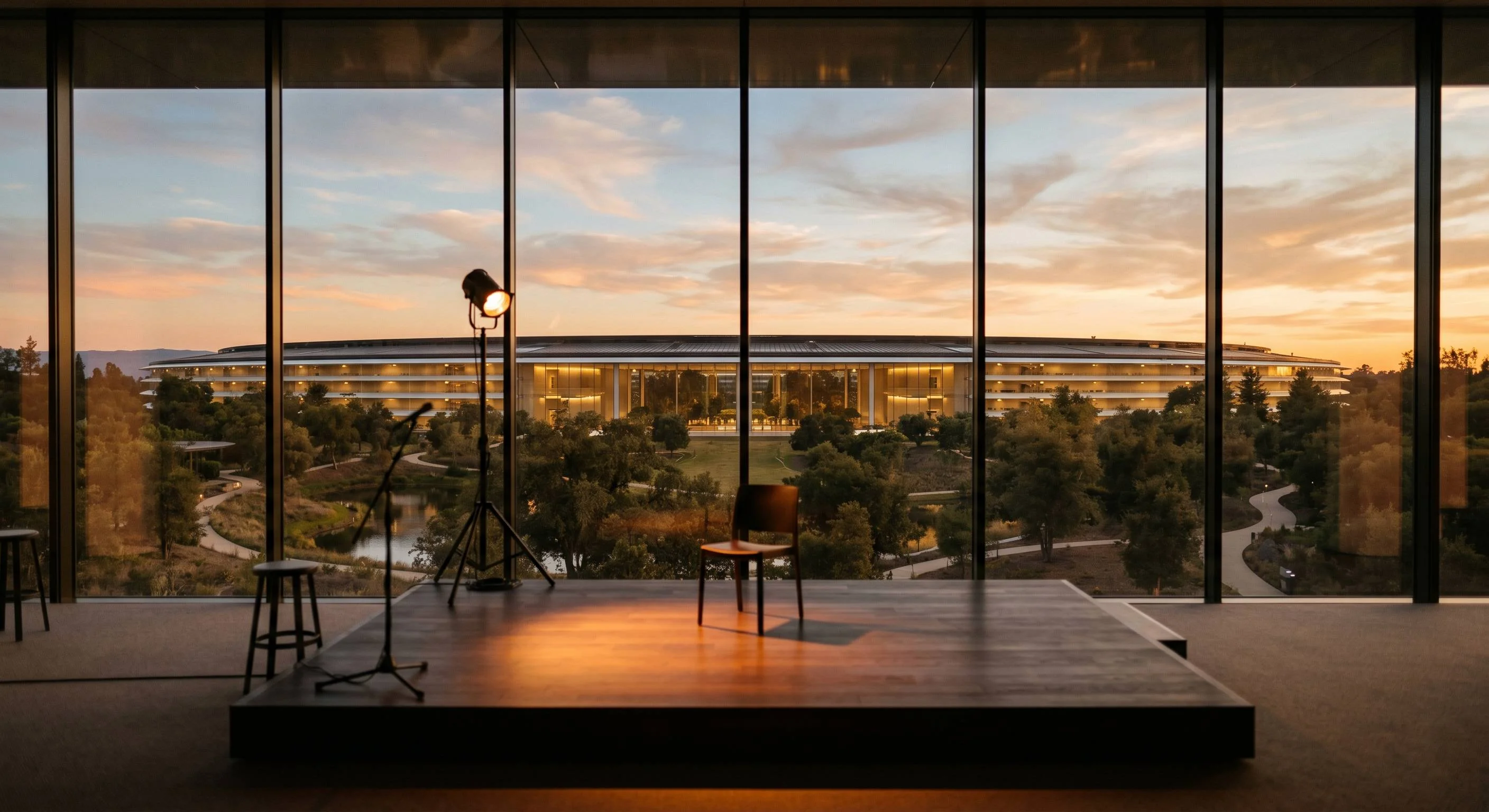
On a Monday morning in Cupertino, California, Tim Cook walked onto the stage at Apple Park for what is almost certainly the last time as CEO. He smiled, welcomed the crowd, and said what he always says at these events: that he had exciting announcements to share. But this time, everyone in the room knew the subtext. After fifteen years, one of the most consequential runs in corporate history was drawing to a close. What followed was an hour of dense software announcements, a significant bet on artificial intelligence, and a quiet goodbye from a man who rarely lets you see him sweat.
Siri, Finally
The headline product at WWDC 2026 was not a phone or a laptop. It was a voice assistant that most people had quietly given up on.
Apple introduced Siri AI, a complete rebuild of its digital assistant, two years after its original AI rollout was widely criticized for being underpowered and full of delayed features. The company acknowledged what critics had been saying for years: user expectations have shifted in the age of generative AI, and the old Siri was not keeping up.
The new version is built to handle natural, back-and-forth conversations. It understands context across apps, can see what is on your screen through an expanded Visual Intelligence system, and supports multi-command requests, meaning you can stack several instructions into a single prompt. Users can also customize how Siri sounds through new pacing and expressiveness controls, and interact through voice or text interchangeably.
Write with Siri lets you draft text anywhere on the device, while a dedicated Siri mode inside the Camera app enables real-world object recognition and practical functions like bill splitting. Voice dictation has also been significantly improved, now handling capitalization and punctuation automatically.
Under the hood, Apple confirmed it has integrated Google's Gemini family of models to power the assistant's advanced reasoning. The company's Apple Foundation Models on Cloud, developed in collaboration with Google, includes a Pro tier described as comparable in quality to Gemini's frontier models. This is a notable departure for a company that spent years insisting it could handle AI entirely on its own terms.
Siri AI will launch in English as a beta in September 2026, with additional languages to follow. It will not be available in the European Union on iOS or iPadOS at launch, with Apple citing Digital Markets Act compliance as the reason. EU users will still receive it on macOS, visionOS, and watchOS.
iOS 27 and the Software Slate
iOS 27 arrived without fanfare as the backbone for the Siri and Apple Intelligence updates, but it carries its own story. Apple confirmed it will support every iPhone model going back to the iPhone 11, making it one of the broadest compatibility launches the company has done in years. Performance was a major focus: apps are said to launch up to 30 percent faster, newly captured photos appear in the Photos app up to 70 percent more quickly, and AirDrop transfers have been optimized noticeably.
The Liquid Glass design language, introduced in the previous cycle, received a round of refinements. Readability improvements and user-controlled transparency settings address feedback from people who found the earlier version too reflective or visually noisy. A slider now lets users personalize how much Liquid Glass appears throughout the interface.
New parental controls give parents the ability to schedule screen time for children, control which apps they can use, and restrict specific websites. These were presented alongside broader trust and safety updates that Craig Federighi, Apple's Senior Vice President of Software Engineering, anchored the developer-facing portion of the keynote around.
Apple Intelligence, the company's broader AI umbrella, received new tools including complex photo editing through natural language descriptions, and a Core AI framework that lets third-party developers integrate external models directly into their apps for use on device. Xcode's Coding Assistant can now localize an entire app automatically and supports Google's Gemini for what the industry has started calling vibe coding, meaning rough, conversational instruction rather than precise syntax.
macOS 27 closed out the software showcase under the name Golden Gate, a nod to the San Francisco Bay landmark. It brings Siri AI into Spotlight, extends the design cleanup of Liquid Glass to the Mac, and signals what Apple described as the close of the Intel era, with the platform now fully oriented around Apple Silicon.
Developer betas for iOS, iPadOS, macOS, watchOS, and visionOS 27 went live the same day as the keynote. Public betas are expected next month. The full release is scheduled for autumn 2026.
A Quiet Goodbye
There was no grand ceremony. No lifetime achievement segment. No reel of greatest moments set to swelling music.
Tim Cook ended WWDC 2026 the way he has ended every WWDC: with a note to developers. But this time the words carried weight they have not carried before. He talked about imagination having no limits, about the best still being ahead, about what it had meant to be on this journey. He thanked the people who build things on Apple's platforms, the developers who submit over a thousand apps to the App Store every single hour.
"It has been the honor of a lifetime," he said.
Cook became CEO in August 2011, stepping into a role that many observers believed was unplayable. Steve Jobs had been the irreplaceable center of Apple's identity. The company's survival without him seemed genuinely uncertain to a lot of people. What followed was fifteen years in which Apple became the most valuable company in human history, launched the Apple Watch, the AirPods, Apple Silicon, and Apple Intelligence, expanded into services and healthcare and spatial computing, and grew its installed base to over 2.35 billion active devices worldwide.
His successor, John Ternus, was not on stage during the keynote. He takes over on September 1. Ternus has been Apple's Senior Vice President of Hardware Engineering and is largely credited with the transition to Apple Silicon. He is a different kind of communicator than Cook: more technical, less polished in the boardroom sense. What his Apple looks like is the next chapter.
What It All Means
WWDC 2026 was a software event, and by design a quiet one on hardware. No new devices were announced. The focus was entirely on the intelligence layer sitting on top of the hardware that already exists in hundreds of millions of pockets and on desktops around the world.
That is a deliberate posture. Apple spent two years being outpaced on AI by competitors who moved faster and with less concern for the privacy and integration constraints Apple has always placed on itself. Siri AI, powered in part by Google, is the company's admission that those constraints eventually required outside help. Whether users will feel the difference in their daily lives, or whether the improvements will feel incremental rather than transformative, is the question that will define the next twelve months of coverage.
What is not in question is that WWDC 2026 marked the end of something. Tim Cook inherited a company defined by one man's vision and made it into something larger, more stable, and arguably more durable than it was. The era closing on September 1 is not the end of Apple. But it is unmistakably the end of a particular chapter, and the man who wrote it said goodbye the only way he knows how: quietly, on stage, in front of the people who build things.